
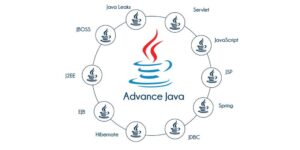
Java’s dependability, platform independence, and broad range of applications make it one of the most widely used programming languages in the software industry. Java is used by developers for cloud computing, banking systems, enterprise applications, web development, Android mobile applications, and large-scale business solutions. Because Java offers robust security, scalability, and performance, many organizations favor it. Learning Java is a great option for those just starting out in programming since it provides a solid foundation in object-oriented programming and software development concepts.
But learning the fundamentals of syntax is not enough to master Java. To create effective, scalable, and practical applications, developers need to grasp both basic Java concepts and sophisticated programming techniques. Transitioning from simple programs to complex application development can be difficult for beginners, but it can be made much easier with regular practice and organized learning. FITA Academy supports learners in developing Core Java fundamentals, object-oriented programming concepts, problem-solving skills, and real-world application development through practical coding exercises and hands-on projects.
Understanding the Fundamentals of Core Java
Understanding Core Java fundamentals is the first step towards becoming an expert in Java. The fundamental ideas that underpin object-oriented development and Java programming are included in Core Java. Variables, data types, operators, loops, conditional statements, arrays, methods, classes, and objects are some of these ideas. Since these principles are utilized in practically all Java applications, beginners must grasp them thoroughly before advancing to more complex subjects.
Java’s object-oriented programming style is one of its greatest advantages. Developers can write reusable and well-organized code by using concepts like inheritance, encapsulation, abstraction, and polymorphism. For instance, encapsulation protects data by limiting direct access, whereas inheritance enables developers to create new classes using pre-existing functionality. Code structure and maintainability are enhanced by an understanding of these concepts.
Setting Up the Java Development Environment
Learners need to set up a suitable development environment before they can write Java programs. Installing the Java Development Kit (JDK), which includes the tools needed to compile and execute Java applications, is the first step. To make coding, debugging, and project management easier, developers also install an Integrated Development Environment (IDE), such as Eclipse IDE or IntelliJ IDEA. By providing features like syntax highlighting, error detection, and code suggestions, these tools increase productivity.
Following installation, students should set up environment variables and use basic commands to confirm the configuration. The first step in verifying that Java is installed correctly is typically to write and run a simple “Hello World” program. Beginners can learn Java more successfully if they comprehend how compilation and execution operate. Core Java Training in Chennai offering practical, industry-focused guidance in object-oriented programming, Java fundamentals, application development, exception handling, collections, and database connectivity.
Mastering Classes, Objects, and OOP Concepts
Learning classes and objects is crucial to becoming a proficient Java developer since object-oriented programming is the foundation of Java development. In Java, an object is a real-world entity that is created from a class, which serves as a blueprint. For instance, objects represent individual cars with distinct values, whereas a “Car” class might have properties like color and speed.
One of the most crucial object-oriented ideas is encapsulation, which shields data from unwanted access. Private variables and public getter and setter methods are used by developers to regulate data modification. Inheritance reduces code duplication and increases reusability by enabling a class to inherit properties and methods from another class. Programs become more adaptable and scalable thanks to polymorphism, which allows methods to act differently depending on the context.
Exploring Advanced Java Concepts
After mastering Core Java, students can proceed to more complex ideas that are necessary for developing enterprise applications. One such concept that enables programs to carry out several tasks at once is multithreading. Threads are used by developers to enhance performance in real-time analytics platforms, banking systems, and gaming software. Building effective applications requires an understanding of concurrency management and thread synchronization. At a B School in Chennai, Core Java training can significantly boost your career readiness and employability by enhancing your Java programming skills
Another sophisticated idea that is frequently utilized in software development is the Java Collections Framework. Developers can store and manage data dynamically with the aid of collections like ArrayList, HashMap, and HashSet. Selecting the appropriate collection type enhances memory usage and application performance. Because it enables programs to gracefully handle runtime errors without crashing, exception handling is equally crucial.
Understanding APIs, Frameworks, and Modern Java Development
Another sophisticated idea that is frequently utilized in software development is the Java Collections Framework. Developers can store and manage data dynamically with the aid of collections like ArrayList, HashMap, and HashSet. Selecting the appropriate collection type enhances memory usage and application performance. Because it enables programs to gracefully handle runtime errors without crashing, exception handling is equally crucial.
Web development, database integration, and dependency management are made easier by well-known Java frameworks like Spring Framework. Additionally, developers use Maven for project management and dependency handling and Hibernate for object-relational mapping. These tools enhance software maintainability and shorten development times.
Improving Coding Skills Through Practice and Projects
One of the best strategies for learning Java programming is consistent practice. Reading concepts by itself is insufficient because practical coding experience enhances programming abilities. These are the differences between java and core java. Websites that provide algorithm exercises and coding challenges can assist students in methodically improving their programming abilities.
Mini-projects are another great way to learn. Learners can apply Java concepts in practical situations by working on projects like inventory management tools, banking systems, online quiz apps, and library management systems. Additionally, projects enhance knowledge of database integration, object-oriented programming, and user interface design.
Common Mistakes Beginners Should Avoid
When learning Java, many novices encounter difficulties because they quickly go over ideas without developing a solid foundation. Learning syntax by heart without comprehending programming logic is a common error. Developers who solely concentrate on theory frequently find it difficult to solve real-world coding issues. Rather, students should comprehend the rationale behind the application of particular concepts and how they address practical issues.
Avoiding the concepts of object-oriented programming is another frequent error. Programs can be challenging to maintain when novices write all of their code in a single class without the necessary structure. Readability and scalability are enhanced by learning modular programming and appropriate code organization. Another problem is that developers who don’t analyze errors frequently make the same mistakes.
Real-World Applications of Java
Java’s versatility and dependability make it popular in many industries. Java is used by banking systems for large-scale financial applications and safe transaction processing. Java is used by enterprises for cloud-based business apps, inventory platforms, and customer relationship management systems. Java is also widely used in government and healthcare systems due to its robust security and stability features.
The development of Android applications also heavily relies on Java. Java is used by developers to produce mobile applications that are compatible with millions of devices across the globe. Java technologies are also crucial for distributed systems, e-commerce platforms, and web applications. Java is widely used by businesses developing cloud applications and big data solutions because it effectively manages heavy workloads.
Conclusion
It takes perseverance, regular practice, and an organized learning methodology to master Core Java and advanced concepts. Because Java combines platform independence, object-oriented principles, and robust development tools, it offers a solid foundation for software development. Beginners can develop the confidence necessary to successfully explore advanced programming topics by concentrating on fully grasping Core Java concepts.
Developers can produce scalable, expert applications for real-world use cases by learning classes, objects, collections, multithreading, exception handling, APIs, and frameworks. Developing projects, practicing debugging, and gaining real-world coding experience are crucial for enhancing programming abilities and problem-solving skills. In the rapidly changing software industry, developers who maintain consistency and never stop learning new technologies are better able to adapt.